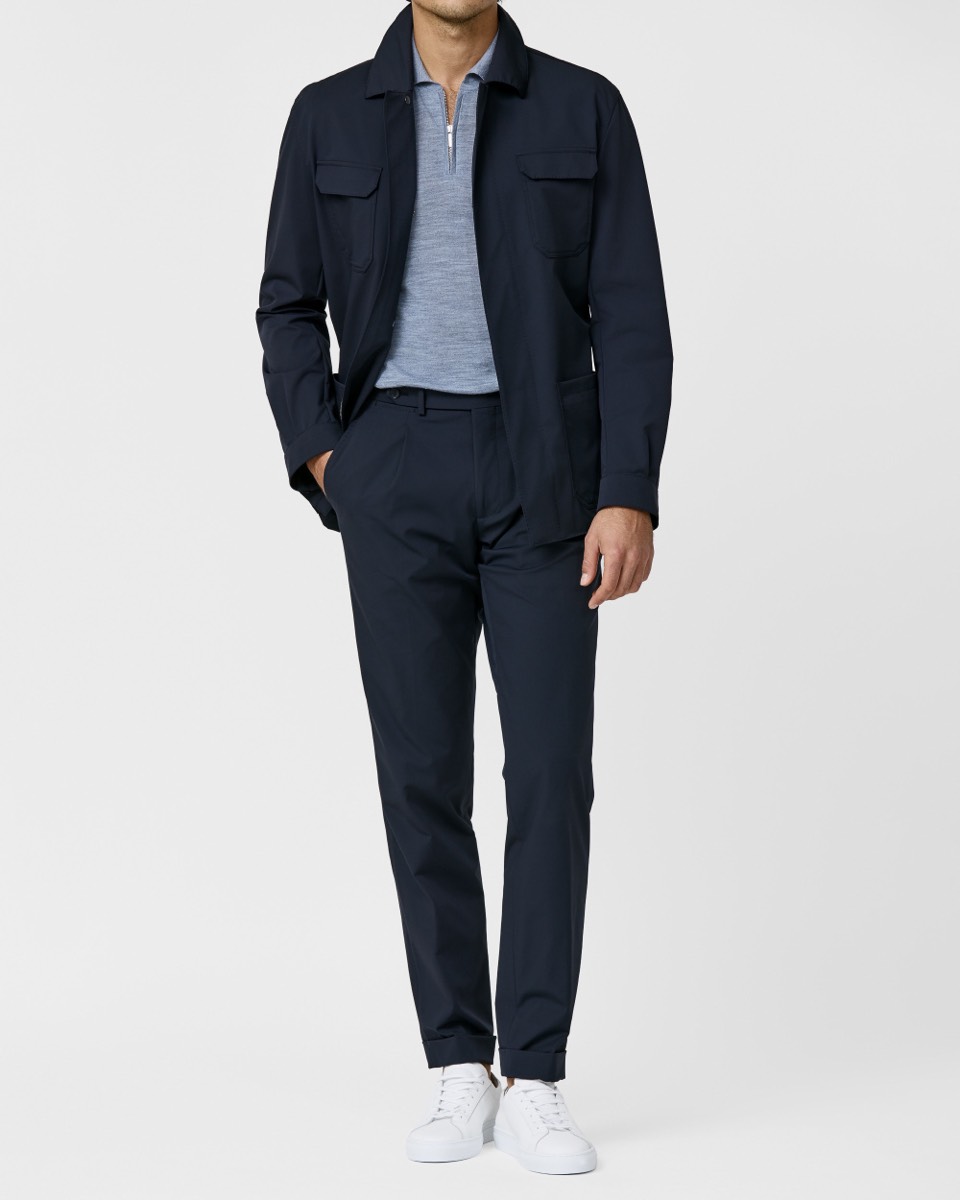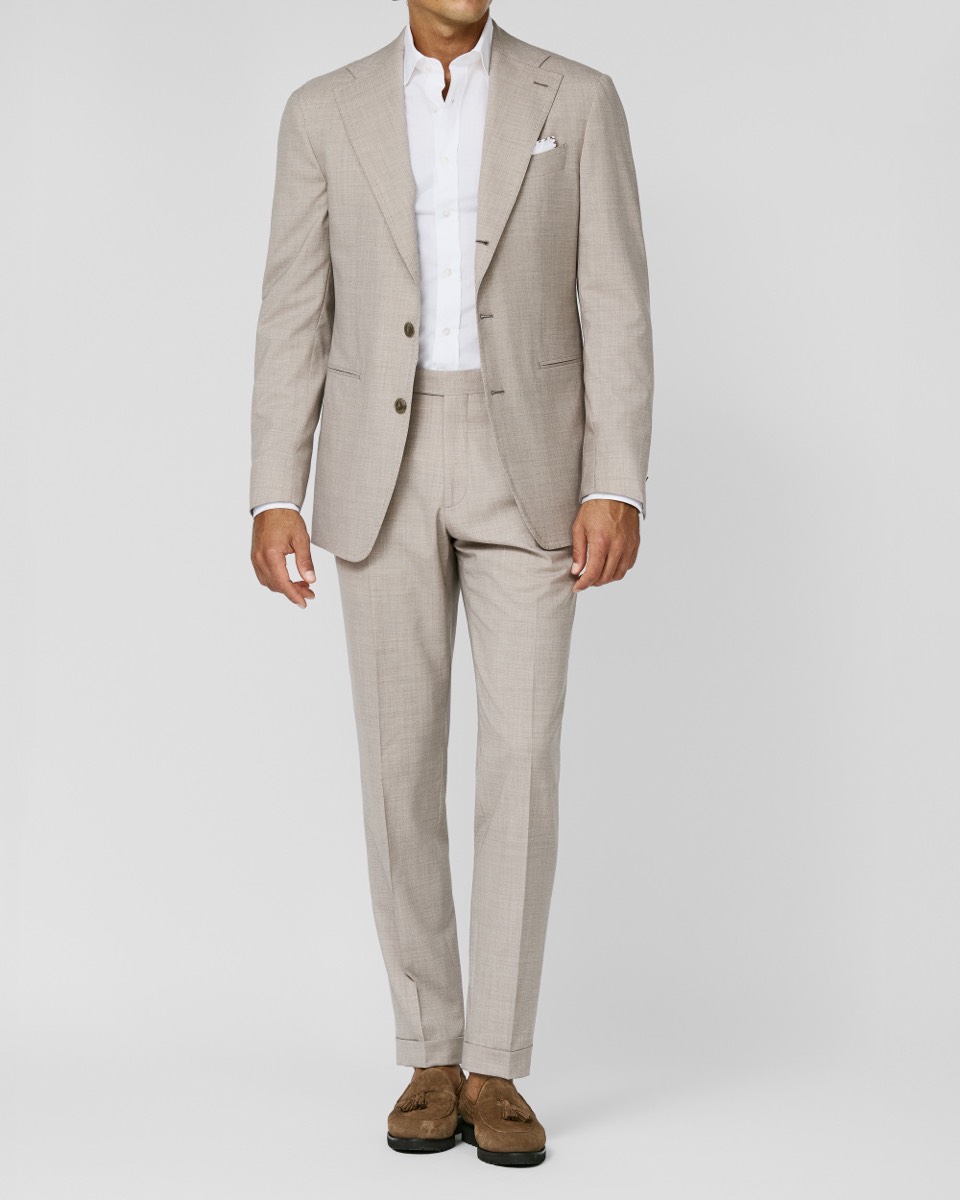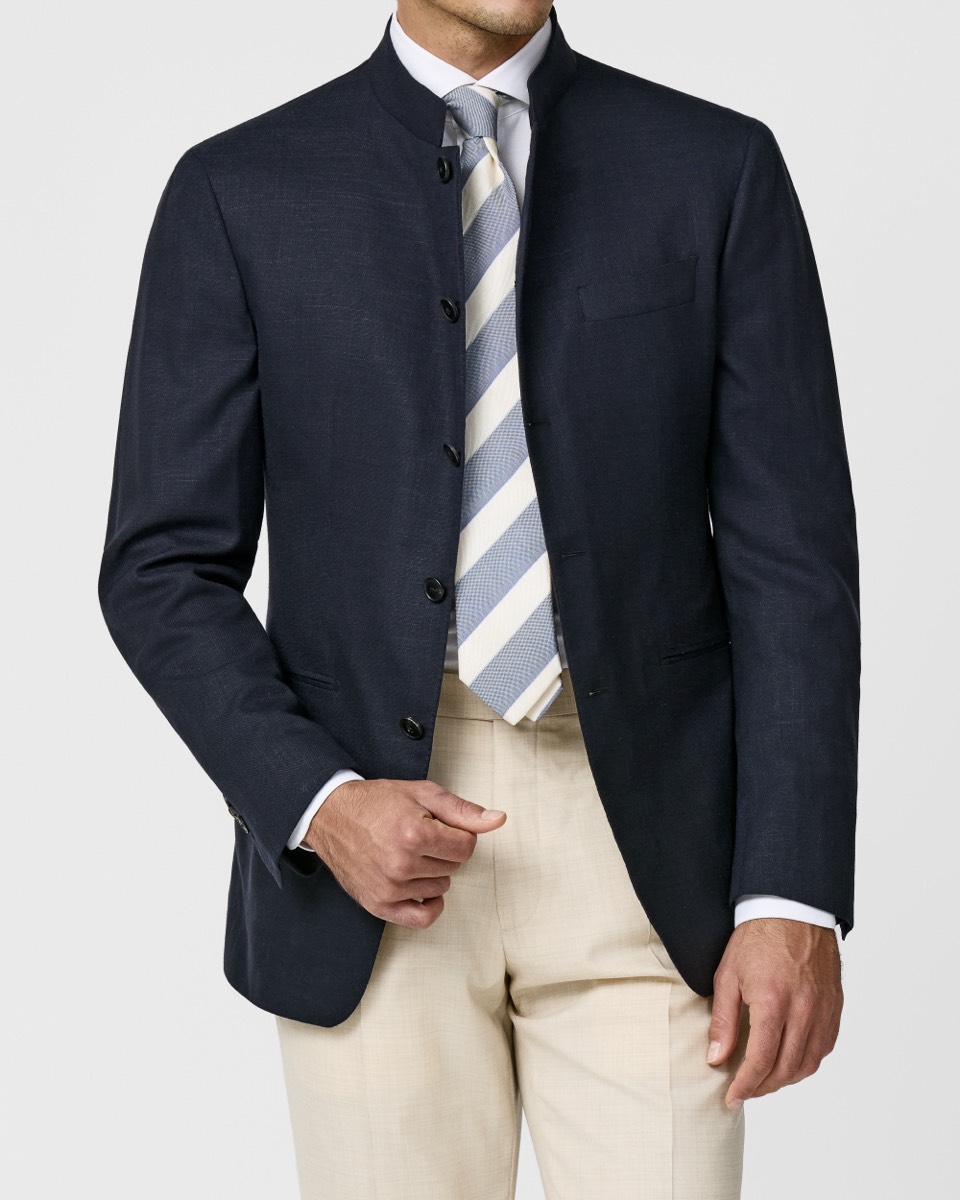
The lapel roll is one of those things that is difficult to describe in words and immediately recognizable in person. It is the soft curve that forms where the front of a jacket folds back to create the lapel. When it is right, the lapel seems to spring lightly away from the chest, rolls outward in a natural arc, and lies flat without appearing to have been pressed flat. When it is wrong, the jacket front looks stiff or collapses inward. Most people can see the difference without knowing what to call it.
What the roll line is
In technical terms, the roll line is the fold that runs from the top button up through the chest to the point where the lapel meets the collar. On the canvas behind the facing, this line is marked and the padding stitches on either side of it are made in a specific pattern to encourage the fabric to fold along it naturally. The canvas is then shaped over a tailor's ham, a firm stuffed cushion used to press three-dimensional curves into fabric, and the roll line is set so that the lapel will fall in the correct position when the jacket is worn.
The result is that the fold is not a crease. A crease is a hard, sharp line pressed in. The roll line in a bespoke jacket is a soft, graduated transition from the flat of the chest to the reverse face of the lapel. Looking at the jacket from the side, you can see that the lapel does not lie flat against the chest but sits slightly forward of it, held in that position by the tension of the canvas behind it.
Why it matters
This matters for several reasons. A lapel that lies flat against the chest tends to gap at the chest opening when you move. The notch or peak is pressed forward and it catches light differently from the body of the jacket, drawing attention to the gap. A lapel with a proper roll is self-supporting. It stays in position as you move because its structure holds it, not because it has been pressed into submission.
The shape of the lapel, whether it is a notch, a peak, or a shawl, also affects how the roll reads. A peak lapel, which angles upward toward the shoulder, usually calls for a fuller roll than a narrow notch lapel. The relationship between lapel width, lapel shape, and roll depth is one of the things a tailor considers when discussing the design of a jacket, and it changes based on your body type and the weight of the fabric.
On a well-made jacket, after a few months of wearing, the canvas settles into its final shape and the roll becomes even more natural. The lapel is no longer being held in a particular position. It has learned one. This is the behaviour that distinguishes canvassed construction from fused, and it is the reason that bespoke jackets often look better with age rather than worse.