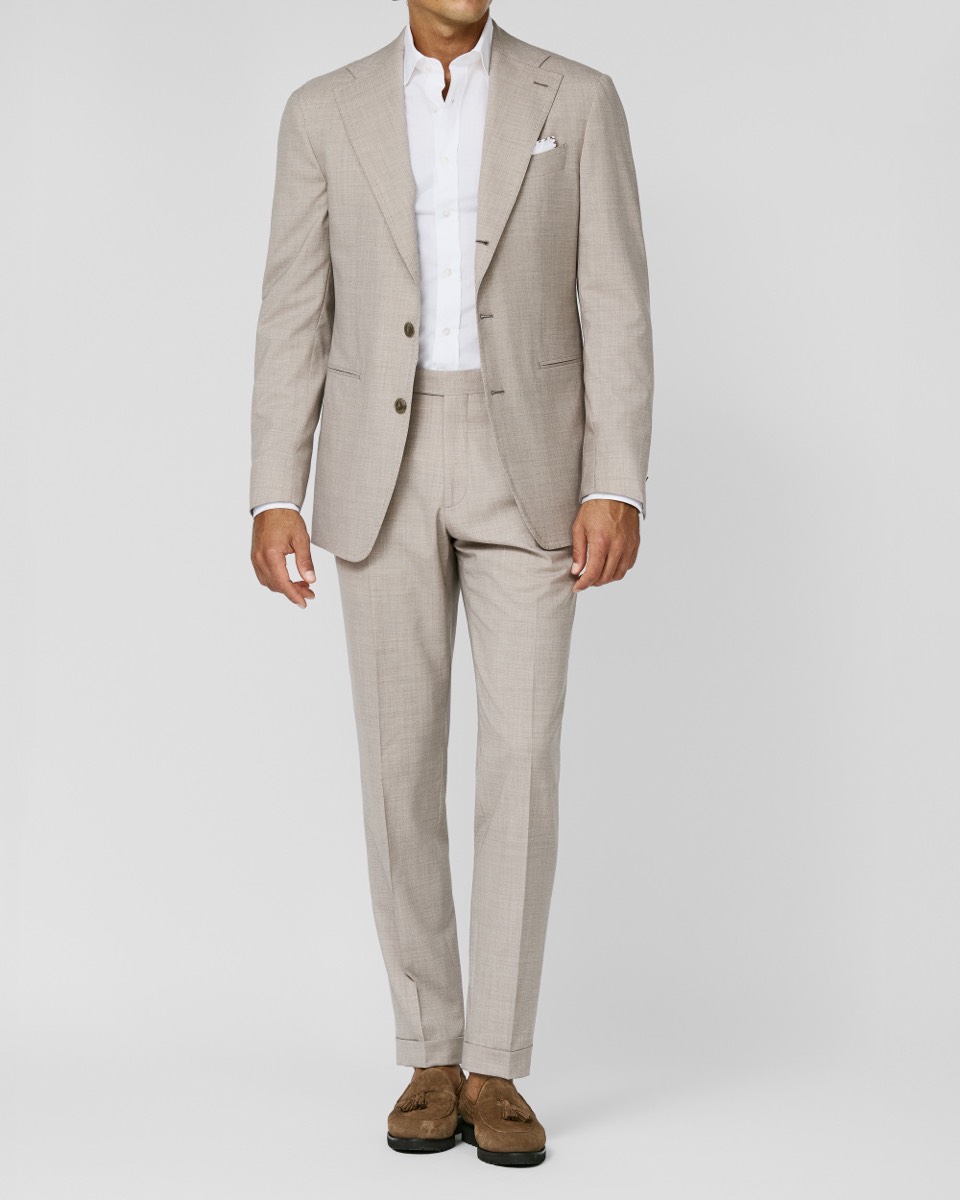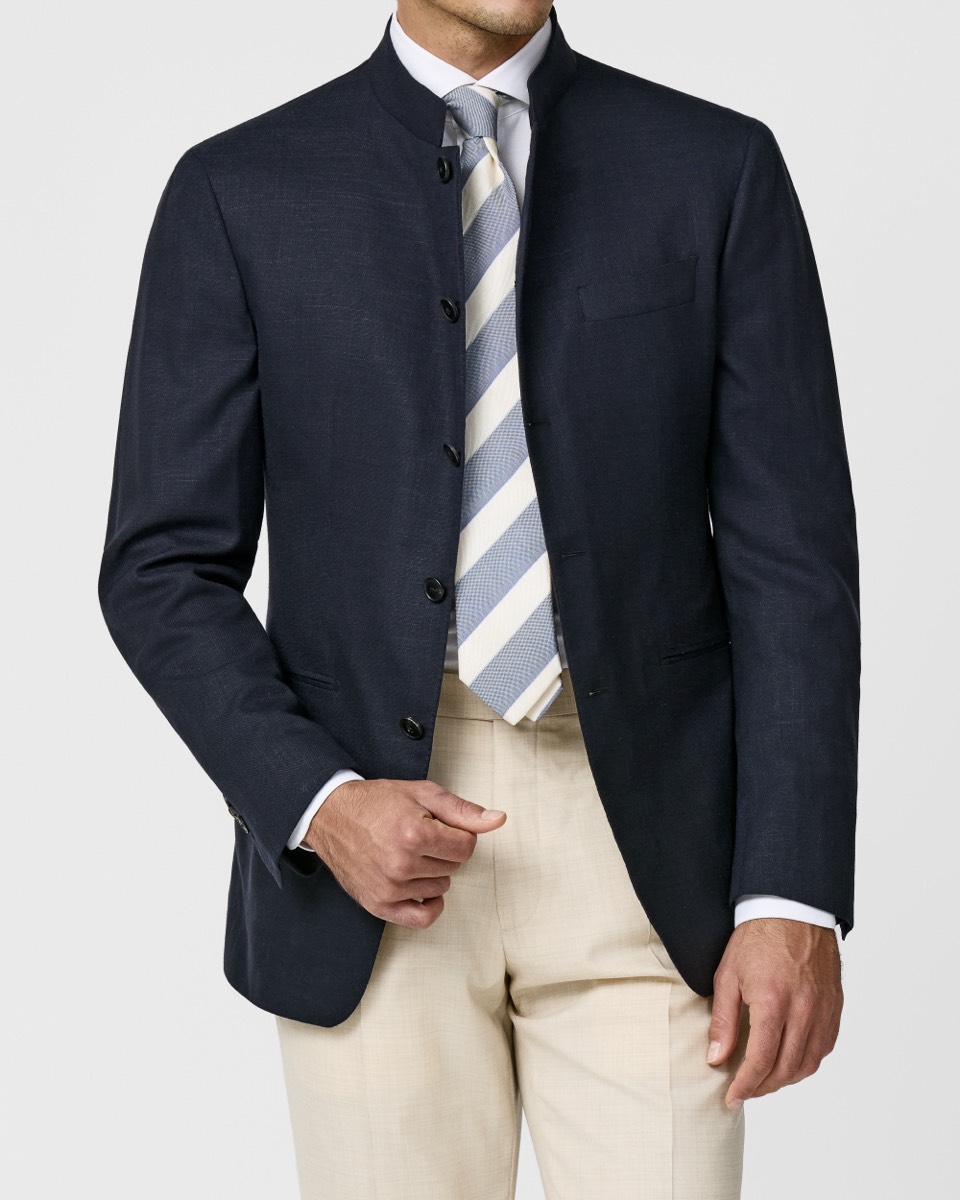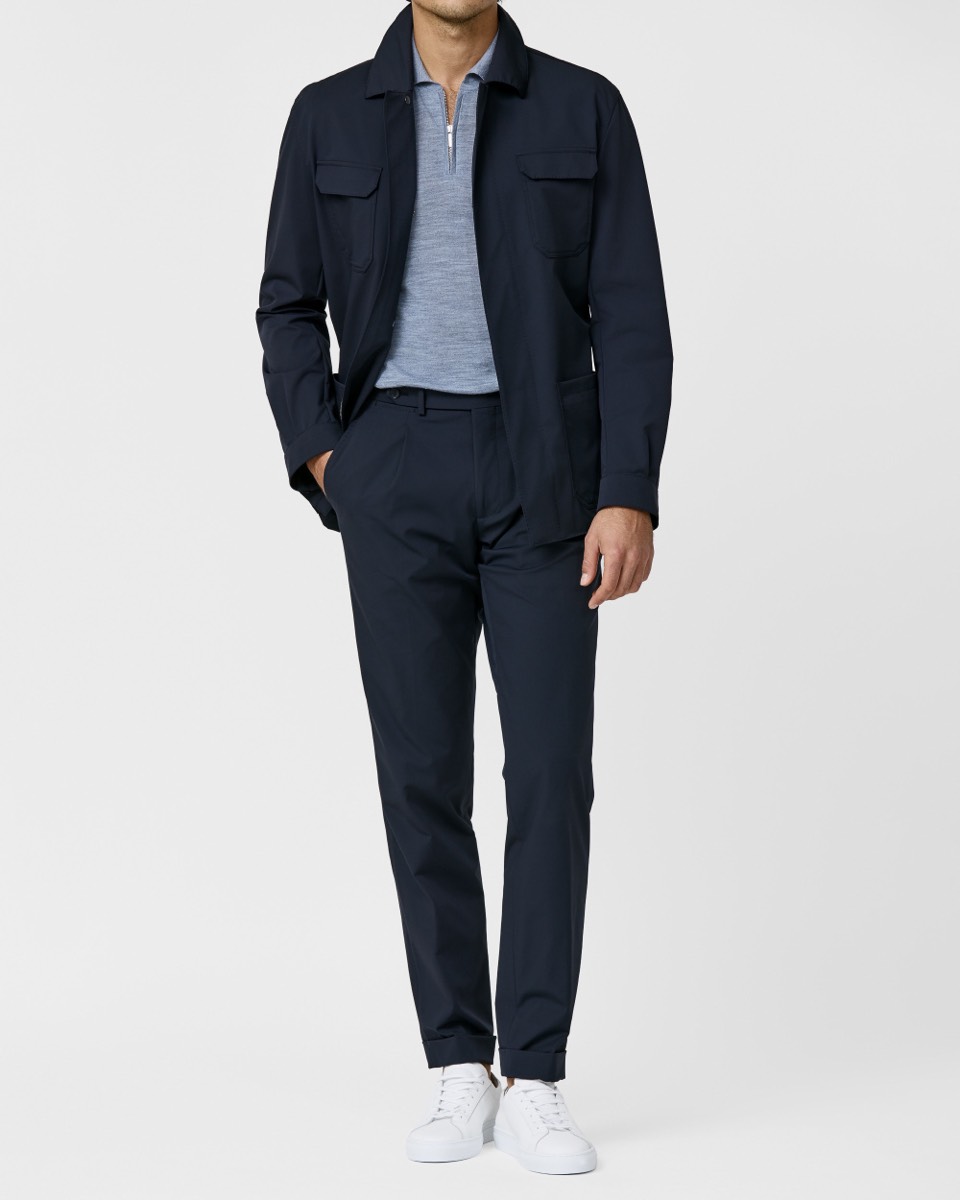
The word bespoke gets used loosely these days. You see it attached to watches, cars, hotels, cocktails. When it applies to a suit, it has a specific meaning, and that meaning is worth understanding before you commission your first garment.
It begins with a conversation
Bespoke tailoring begins with a conversation, not a measurement. The measurements come later, and there are a lot of them, but a tailor who starts measuring before he understands you is skipping the most important step. What occasions are you dressing for? How do you carry yourself? Do you run warm or cold? What have you worn before and what do you wish had been different? These questions shape everything that follows.
A pattern drawn for one person
A bespoke pattern is made from scratch for your body. This is not the same as made to measure, where a standard block pattern is adjusted to approximate your proportions. In true bespoke, your tailor starts with brown paper and builds the pattern entirely around your measurements, your posture, your asymmetries. Everyone has them. One shoulder sits lower than the other. One arm hangs slightly forward. The tape measure finds these things, and the pattern records them.
The paper pattern that results from this process belongs to you. It lives in the atelier's archives. Every time you commission another garment, your tailor can refer to it, refine it, build on it. After two or three commissions, your pattern is a precise record of your body and your preferences. That is something no off-the-rack garment can approximate.
The baste and the fittings
The cut is made from the pattern, in fabric. Your tailor cuts each piece by hand, and the early stages of construction are done loosely, in what is called a baste. The garment is held together temporarily so it can be fitted on your body. In the fitting room, your tailor marks adjustments directly onto the fabric with chalk, takes the garment apart again, and corrects the pattern. This is the fitting. Depending on the complexity of the garment and the subtlety of your shape, there may be several of them before the final work begins.
What is inside the jacket
After the fittings, the garment is taken apart and rebuilt for the last time. The canvas, a structure of woven horsehair and linen, is hand-stitched to the chest piece so that it takes on the natural curve of your body. This is the part of bespoke construction that cannot be rushed or replaced. Most machine-made garments use a fused interlining instead: a stiffening layer bonded to the front of the jacket with adhesive. It is quicker and cheaper, and it gives the jacket a flat, rigid look that bespoke does not have. The canvas, by contrast, floats against the fabric. Over time, it shapes itself to how you move and stand. A well-made bespoke jacket goes on settling to your body for years after you collect it.
Hand-stitching is used throughout. The collar is set by hand. The lapels are pad-stitched by hand, rows of small stitches inside that build the roll into the canvas, and a line of pick-stitching along the edge keeps it crisp. Pockets are hand-sewn. Buttons are sewn through with a shank, which keeps them lifted slightly from the fabric and makes them far less likely to pull. The buttonholes, in a proper bespoke garment, are cut and worked entirely by hand, one at a time.
None of this is visible from across a room. The outside of a bespoke jacket can look exactly like any other jacket. The difference is in how it sits, how it moves, how long it lasts. People who have worn both usually find it difficult to go back.
Fabric and time
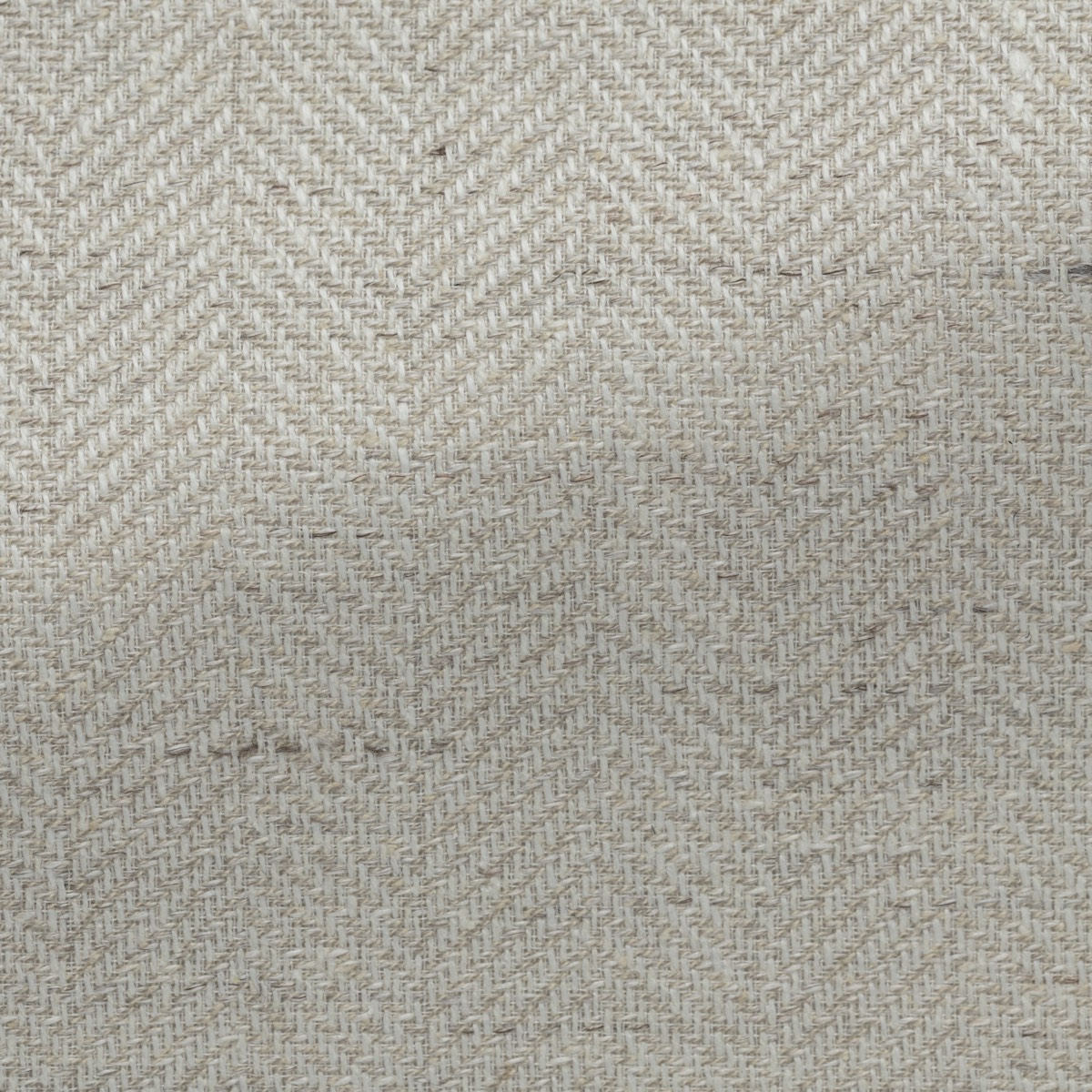
There is also the matter of fabric. In bespoke, you choose your own fabric from the mill's bunches before the garment is made. Your tailor advises you on what will work best for your climate, your lifestyle, how often the garment will be worn and cleaned, what you will pair it with. A good fabric chosen well will look better and last longer than a good fabric chosen badly.
The process takes time. At Casa Legacy a suit takes four to six weeks, sometimes longer during busy periods or for complex commissions; many houses take longer. You will return to the atelier for fittings along the way. If you are based abroad, a good tailor can work around your schedule with a home visit for the measurements and a final fitting when the garment is near completion.
Bespoke is not for everyone, and it does not need to be. But if you have spent years buying expensive ready-to-wear and still finding that something is always slightly off, the shoulder too wide, the chest too full, the sleeves too long, then you already know the problem that bespoke solves. The garment is made around you, not the other way around. That is the difference.